-
 Atrastas'ın mermer steli
LATW Cat. 10
Heykel, Yazıt
Mermer, Taş
MÖ 520-500 (Hanfmann); MÖ 4.yüzyıl (Bossert) (Geç Lidya (Pers))
Beyaz mermer stel. Üstte, kabartmada bir erkek, masanın yanında bir taburede oturur, arkasındaki belirsiz bir şekil hakkında çeşitli tanımlar yapılmıştır (oturan çocuk, Bossert; bir köpek protomu, Hanfmann). Erkeğin sağ kolu orantısız uzunluktadır ve...
-
 Haliller'den mezar steli
LATW Cat. 11
Heykel, Yazıt
Mermer, Taş
MÖ 4.yüzyıl ortalarından hemen sonra (Geç Lidya (Pers))
Stelin üstünde “yerel bir lyra-volüt tipi anthemion tepe süsü vardır. Palmetin yerini şematik işlenmiş uçan bir kuş almış, kuş kanatları palmet yaprakları yerine geçmektedir” (Roosevelt 2009, 261). Anthemion altındaki kabartmada yüzü sağa dönük bir k...
-
 Artemis ve Kybele'yi gösteren mermer sunak steli
LATW Cat. 35
Heykel
Mermer, Taş
MÖ 400 civarı (Geç Lidya (Pers))
Beyaz mermer. Dikdörtgen stelin tepesi günümüze korunagelmemiştir. Kabarık bordürler basamakların, antelerin ve tapınak veya naiskos alınlığının silmelerini göstermekte ve kabartma olarak işlenmiş dört figürü çevrelemektedir. Silmeli alanının üçte ik...
-
Oturan Adamla Yazılan Stel (Sakardas'ın oğlu Atrastas)
R2 Cat. 17
Heykel
Mermer, Taş
520-500 BC (Geç Lidya (Pers))
The stele was set at the bottom into a base. The back, which was probably not seen, is extremely roughly trimmed. The sides are finished with multiple claw chisel. The lower part of the front preserves the scattered stroke patterns of claw chisel and...
-
 Anthemion Parçası
R2 Cat. 46
Heykel
Mermer, Taş
530-520 BC (Geç Lidya (Pers))
Fragment of a stele with lotus-volute finial (anthemion).The general type is made clear by the stele Cat. 45 (Figs. 148-149; and a closely comparable fragment from Daskylion (Fig. 152). Preserved is the central part of the finial and the broad raised...
-
 Oda Mezarı Stel
R2 Cat. 47
Heykel
Kireçtaşı, Taş
520-480 BC (Geç Lidya (Pers))
The plain shaft rises from a simple low rectangular base. The proportion of shaft H. to W. is 4:1. Unlike Cat. 45 and Cat. 46 (Figs. 148-151) the convex volutes rose from two central stems; the eye was an elaborate plastic rosette. A thin, "mannerist...
-
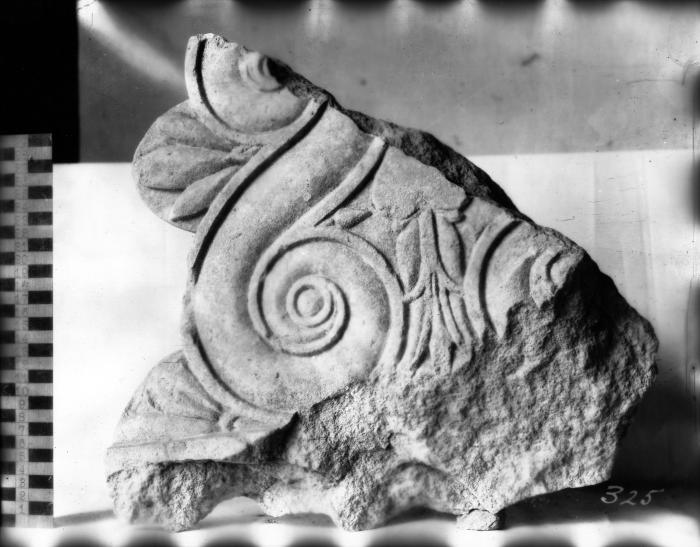 Marşın Parçası
R2 Cat. 48
Heykel
Mermer, Taş
500-450 BC (Geç Lidya (Pers))
The finial consisted of two spirals symmetrically placed in lyre-like design. H.C. Butler writes, "The two double reversed scrolls carried some crowning feature like a palmette. The scrolls were described by pulvinated bands with raised flat edges. T...
-
 Lidce Yazıtlı Anthemion Stel Parçası
R2 Cat. 49
Heykel
Mermer, Taş
Later 5th or 4th C. BC? (Geç Lidya (Pers)?)
The carefully cut ornament includes part of a downward-pointed lotus with five thin leaves, a concave leaf-like ending to the lower part of a volute, and a rounded part above. The finial projected sideways from the shaft. The leaf-like volute end con...
-
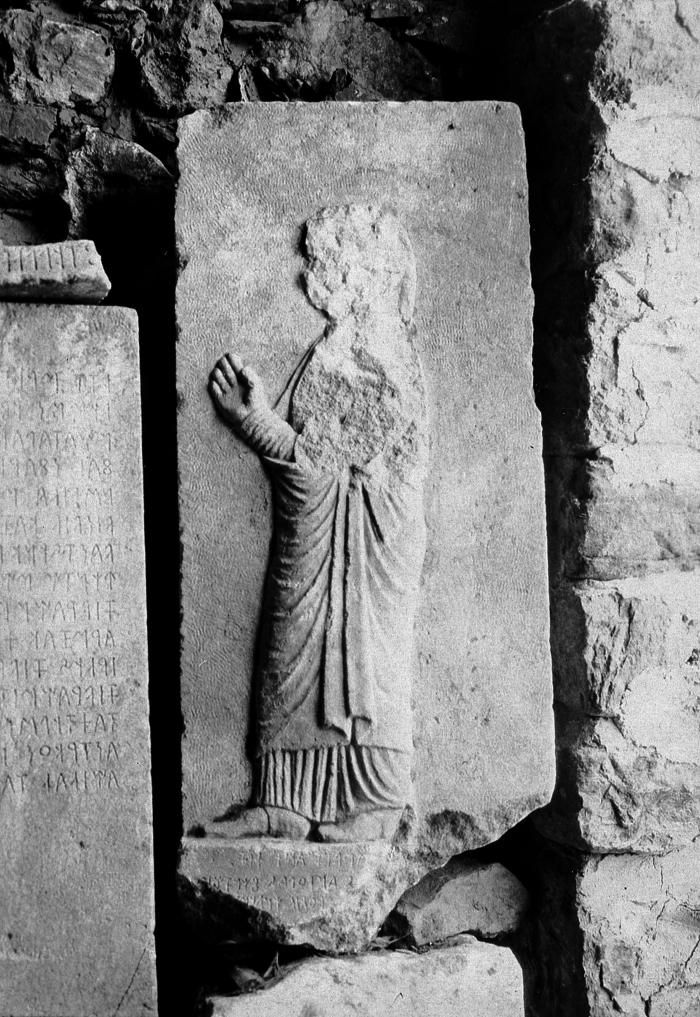 Dua eden kadın ile stel
R2 Cat. 233
Heykel
Mermer, Taş
450-425 BC (Geç Lidya (Pers))
Although there is no sign of dowelling on top, the stele probably had a covering element, possibly a palmette. A female figure facing to I. is placed freely and somewhat asymmetrically on a claw-chiseled background. The sides of the stele are also cl...
-
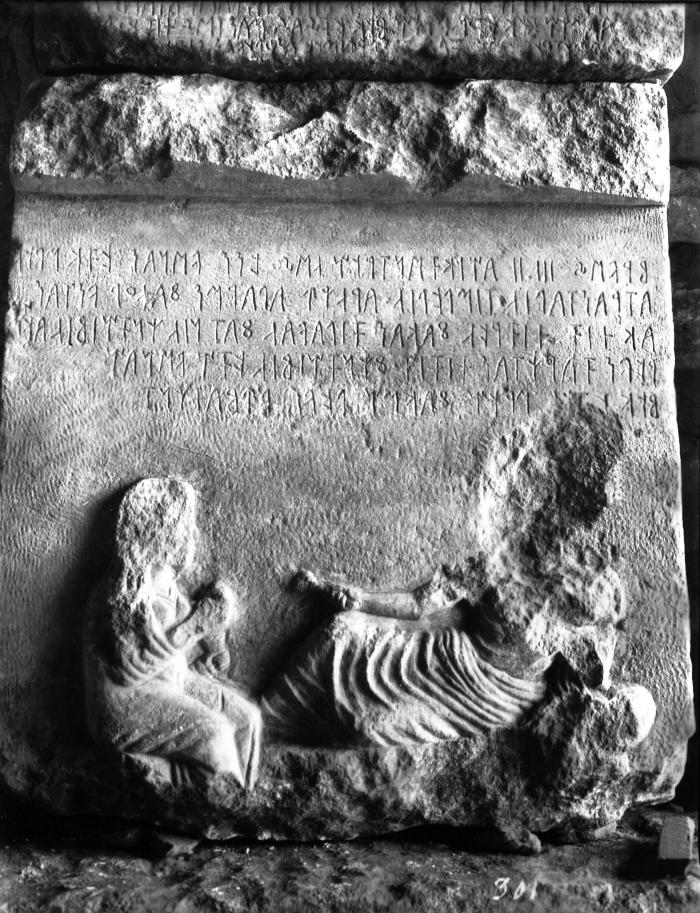 Timles'in oğlu Atrastas'ın Mezar Steli
R2 Cat. 234
Heykel
Mermer, Taş
330-329 BC (Hellenistik)
C. H. Greenewalt, Jr. noted that at the top, the relief molding has painted egg and dart motif, yellow with black background. There are five lines of text in Lydian, with red preserved in some letters. Below the text is a sculptured scene showing a m...
-
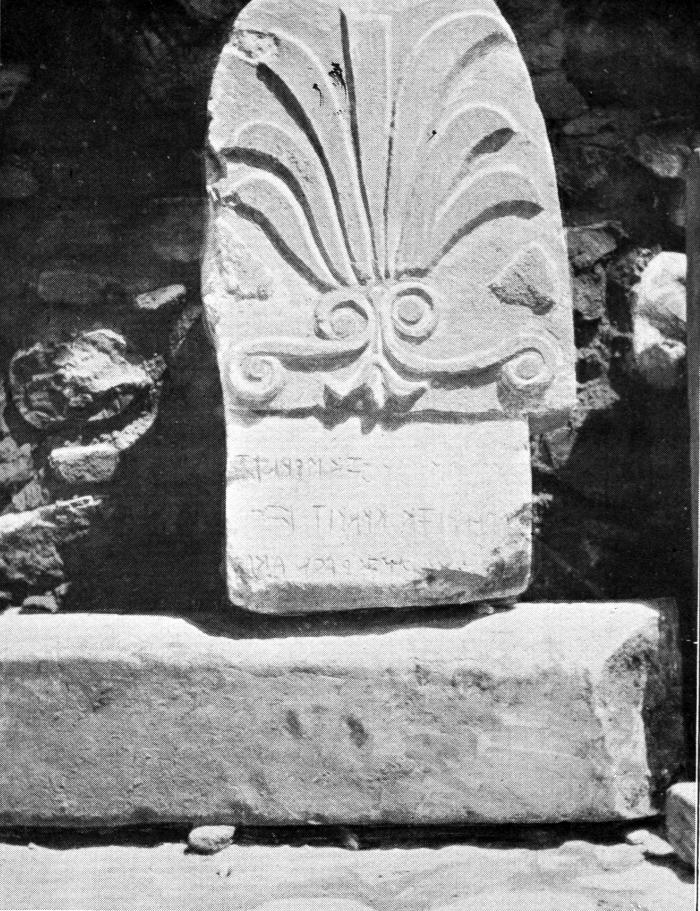 Palmette ile Sepulchral Stel'in bir kısmı
R2 Cat. 240
Heykel
Mermer, Taş
ca. 420-400 BC (Geç Lidya (Pers))
The stele has an oval finial, seven-petalled palmette on antithetic horizontal spirals, and downward-pointed small lotus. The anthemion projects slightly to the spectator's r. "The lateral projection ... was probably next to the dromos, whereas the s...
-
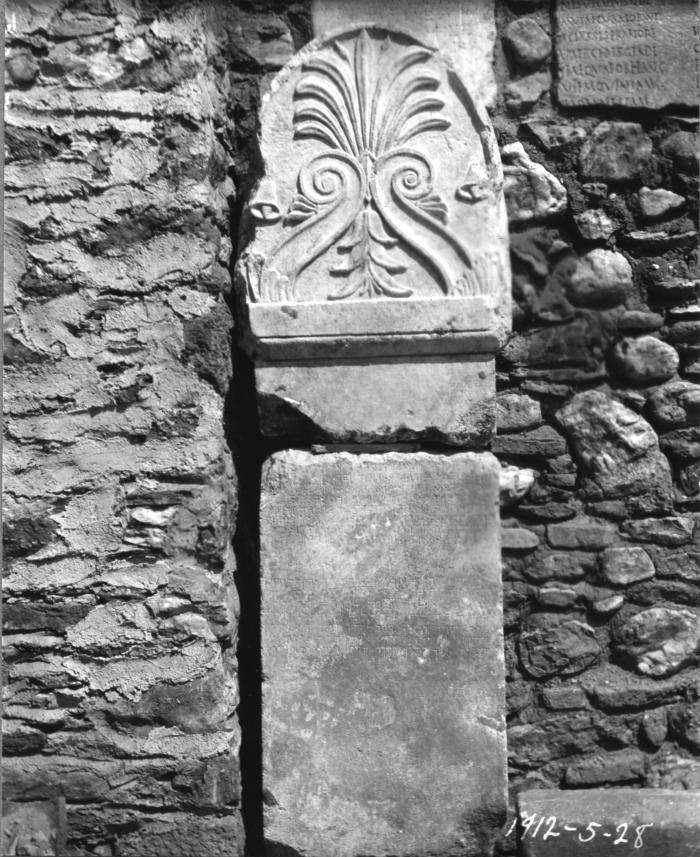 Lidya-Aramca İki Dilli Yazıtlı Marş
R2 Cat. 241
Heykel
Mermer, Taş
394 BC (Geç Lidya (Pers))
Two vertical half-volutes grow out of small acanthus chalices to support a seven-leaf simple palmette. Two small flowers (or ears of corn?) flank the central petal. Three large downward-pointed chalices are in the center below the palmette. Below the...